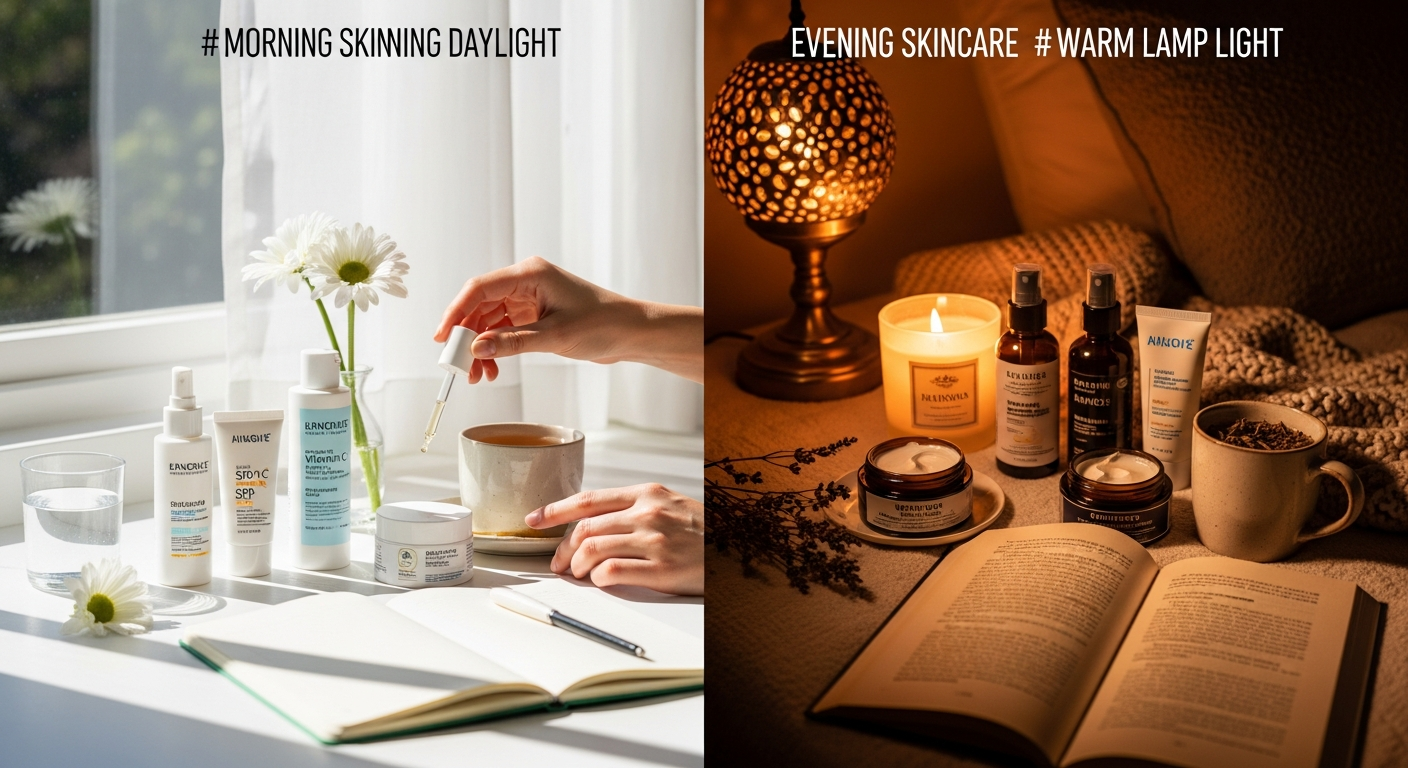
AM vs PM Routine: What Changes at Night
Your morning and evening skincare routines shouldn't be identical. Here's exactly what to change, why, and how to optimize both for better results.
 Glow Coded Editorial
 Here’s a pattern we see all the time: someone builds a skincare routine, finds products they love, and uses the exact same lineup morning and night. Cleanser, toner, serum, moisturizer. Twice a day, every day. Identical.
It works. Kind of. But your skin has different needs at 7 AM than it does at 10 PM, and tailoring your routines to match those needs is one of the easiest ways to get better results without buying a single new product.
Your morning routine protects. Your evening routine repairs. Once you internalize that distinction, the rest falls into place.
Why Your Skin Needs Different Things at Different Times
The Science of Circadian Skin
Your skin follows a circadian rhythm, just like the rest of your body. Research published in the journal Cell Reports shows that skin functions change measurably between day and night:
During the day. Your skin is in defense mode. It produces more sebum (oil) to protect against environmental stressors, and its barrier function is at its strongest. UV exposure, pollution, and oxidative stress are the primary threats.
At night. Your skin switches to repair and recovery mode. Cell turnover accelerates (peaking around midnight to 2 AM). Blood flow to the skin increases, which means better nutrient delivery and more effective absorption of topical products. Transepidermal water loss also increases at night, which is why you might wake up feeling dry.
Understanding this cycle explains why certain products work better at specific times.
The Morning Routine: Protect and Prep
Your AM routine has one overarching goal: get your skin clean, hydrated, protected, and ready to face the day. It should be faster, lighter, and focused on defense.
Step 1: Gentle Cleanse (or Just Water)
You don’t need to deep-clean your face in the morning. You slept in a (hopefully clean) bed. A gentle cleanser or even a plain water rinse is enough to remove the overnight products and natural oils that accumulated while you slept.
Our approach. Most of our team uses water only in the morning. One person with oilier skin uses a gentle gel cleanser. Neither approach is wrong.
Step 2: Hydrating Toner
A few pats of hydrating toner preps your skin for the products that follow. This step takes about 10 seconds and makes everything after it absorb more effectively.
Step 3: Antioxidant Serum (Vitamin C)
Morning is the optimal time for vitamin C. It provides antioxidant protection against UV-generated free radicals, essentially amplifying the effectiveness of your sunscreen. Think of vitamin C as your skin’s morning bodyguard.
If you don’t use vitamin C, a niacinamide serum is a great morning alternative. It controls oil throughout the day and provides mild brightening.
Step 4: Lightweight Moisturizer
Something that hydrates without heaviness. A gel-cream or light lotion works well for most skin types. You need just enough to lock in your serum and toner, not so much that your sunscreen can’t sit properly on top.
Step 5: Sunscreen (Non-Negotiable)
SPF 50+ broad-spectrum. This is the most important step in your morning routine, full stop. Every other product in your collection is partially undermined if you skip sun protection.
Apply generously: the “two-finger rule” (a line of sunscreen along your index and middle fingers) gives you approximately the right amount for your face and neck. The Anua Airy Sun Cream is one we reach for most mornings because it feels lightweight enough to forget you are wearing it.
Total morning time. 3-5 minutes.
The Evening Routine: Repair and Treat
Your PM routine is when the real work happens. Your skin is more receptive to active ingredients at night, cell turnover is accelerating, and you have hours of uninterrupted treatment time ahead.
Step 1: Oil Cleanser
This is the step your morning routine doesn’t have. An oil-based cleanser dissolves the sunscreen, makeup, and environmental grime that accumulated during the day. Massage it into dry skin for 30-60 seconds, add water to emulsify, and rinse.
You cannot skip this step if you wore sunscreen. Water-based cleansers alone will not fully remove modern sunscreen formulations. This isn’t marketing; it’s chemistry. The Anua Heartleaf Pore Control Cleansing Oil is a reliable evening option that dissolves sunscreen thoroughly while keeping the skin calm with heartleaf extract.
Step 2: Water-Based Cleanser
Your second cleanse removes anything the oil cleanser left behind, plus water-soluble impurities like sweat. The “double cleanse” (oil + water cleanser) is the backbone of Korean skincare, and it’s the evening routine’s most important two steps.
Step 3: Exfoliant (2-3 Nights per Week)
Evening is the correct time for chemical exfoliants (AHAs and BHAs). These increase photosensitivity, so using them at night and then applying sunscreen the next morning is the safest approach.
AHAs (glycolic acid, lactic acid) for surface-level texture and brightness. BHAs (salicylic acid) for pore clearing and oil control. Use one or the other, not both on the same night.
On exfoliant nights, skip retinol. Using both together is too aggressive for most skin types.
Step 4: Toner
Same toner as morning, or a different one if you prefer. Rehydrates the skin after cleansing and preps for the treatment steps.
Step 5: Treatment Serum (Retinol, Peptides, or Targeted Actives)
Evening is when your treatment serums shine. Your skin’s increased permeability at night means better absorption, and the extended wear time (6-8 hours) maximizes effectiveness.
Retinol. The gold standard evening active. Stimulates collagen, accelerates cell turnover, fades hyperpigmentation. Must be used at night (it degrades in sunlight and increases photosensitivity).
Peptides. Collagen-stimulating peptides work best with extended contact time. Evening application gives them hours to signal your skin.
Niacinamide. If you used vitamin C in the morning, niacinamide at night is a perfect complement. Barrier repair, oil regulation, and brightening while you sleep.
Step 6: Eye Cream
The delicate under-eye area benefits from overnight treatment. Apply with your ring finger, tapping gently along the orbital bone.
Step 7: Rich Moisturizer or Sleeping Mask
Evening is the time for heavier moisturizers. Your skin loses more water at night (increased TEWL), so a richer cream helps compensate. This is also when sleeping masks (a K-Beauty innovation) earn their place: a thick, occlusive final layer that locks everything in while you sleep.
Total evening time. 7-10 minutes.
The Side-by-Side Comparison
| Step | Morning | Evening |
|---|---|---|
| Cleanser | Gentle rinse or light cleanser | Double cleanse (oil + water) |
| Toner | Hydrating toner | Hydrating toner |
| Actives | Vitamin C or niacinamide | Retinol, peptides, or AHA/BHA |
| Serum focus | Antioxidant protection | Repair and treatment |
| Eye cream | Optional (light formula) | Recommended (richer formula) |
| Moisturizer | Lightweight gel-cream | Rich cream or sleeping mask |
| Sunscreen | SPF 50+ (mandatory) | Not needed |
Products That Belong to Specific Times
Morning Only
- Vitamin C serum. Provides daytime antioxidant protection. Degrades with light exposure if used at night without purpose.
- Sunscreen. Obviously.
- Mattifying products. Oil-control primers, mattifying moisturizers. These serve a daytime function.
Evening Only
- Retinol/retinoids. Photosensitive and most effective during the skin’s repair cycle.
- AHA/BHA exfoliants. Increase photosensitivity. Use at night, protect with sunscreen the next morning.
- Sleeping masks/packs. Thick, occlusive products meant for overnight wear.
- Heavy facial oils. Too shiny for daytime wear and most effective during overnight repair.
Either Time
- Hyaluronic acid. Useful whenever your skin needs hydration.
- Niacinamide. Flexible and well-tolerated at any time.
- Centella/cica products. Soothing works around the clock.
- Snail mucin. The ultimate any-time ingredient.
The Simplified Version
If you want the shortest possible explanation:
Morning. Clean, hydrate, protect. Focus: sunscreen. Evening. Deep clean, treat, repair. Focus: actives.
That’s it. Everything else is just detail.
Common Mistakes
Using retinol in the morning. Retinol degrades in sunlight and increases photosensitivity. Even under sunscreen, it’s suboptimal. Evening only.
Skipping double cleanse at night. If you wore sunscreen (and you should be wearing sunscreen), a single cleanse is not enough to remove it. Incomplete removal means clogged pores and diminished effectiveness of your evening actives.
Making the morning routine too heavy. Heavy creams and multiple oils in the morning create a poor base for sunscreen and makeup. They can also cause pilling. Keep mornings light.
Using all actives at once in the evening. Retinol, vitamin C, AHA, BHA, and peptides all in one evening routine is a recipe for irritation. Rotate your actives across different nights.
Skipping evening moisturizer because “I’m oily.” Your skin loses more water at night. Even oily skin benefits from a light moisturizer or sleeping mask. Your overnight actives will also work better when your barrier is supported.
Building Your Own AM/PM Split
If you currently use the same routine morning and night, here’s how to transition:
- Move your strongest active to the evening only
- Add vitamin C or niacinamide to the morning
- Switch to a lighter morning moisturizer
- Add an oil cleansing step to your evening (if you haven’t already)
- Consider a richer evening moisturizer or sleeping mask
These five changes alone will optimize your routine significantly. You don’t need to overhaul everything at once. Make one change per week and let your skin adjust.
Keep Reading
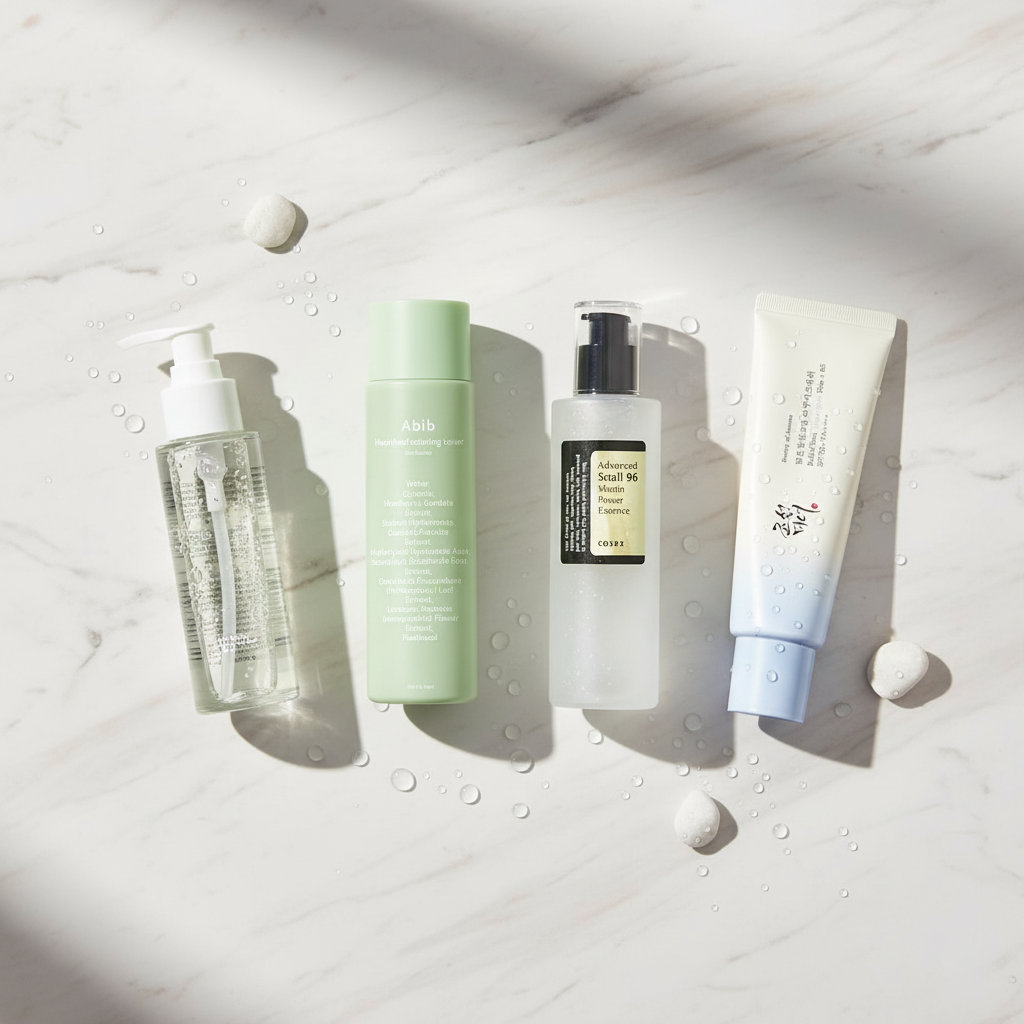
Korean Skincare Routine: The Complete Guide
Everything you need to know about the Korean skincare routine. from the famous 10-step method to a realistic, everyday approach that actually works.
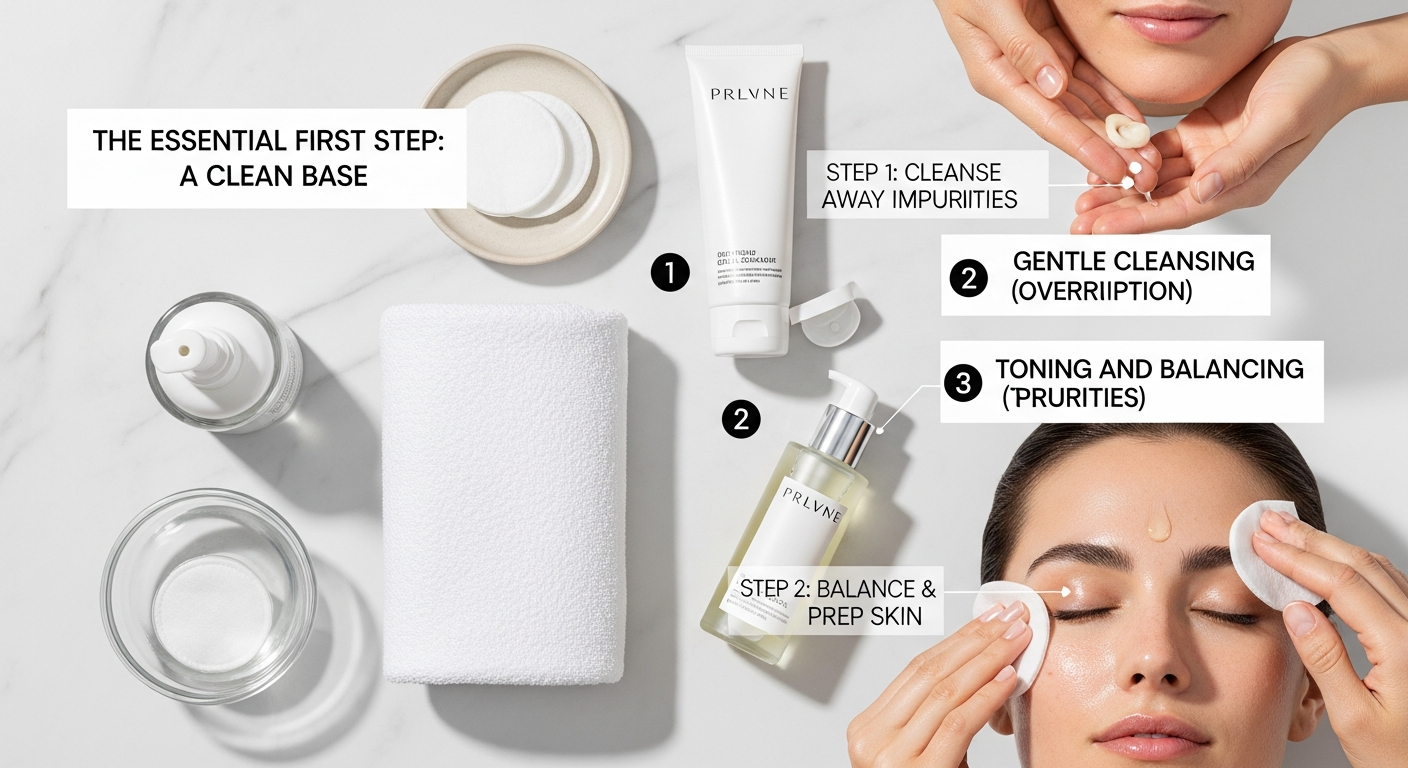
How to Build a Skincare Routine From Scratch
No idea where to start with skincare? This step-by-step guide walks you through building a routine that works, without overwhelming your shelf.
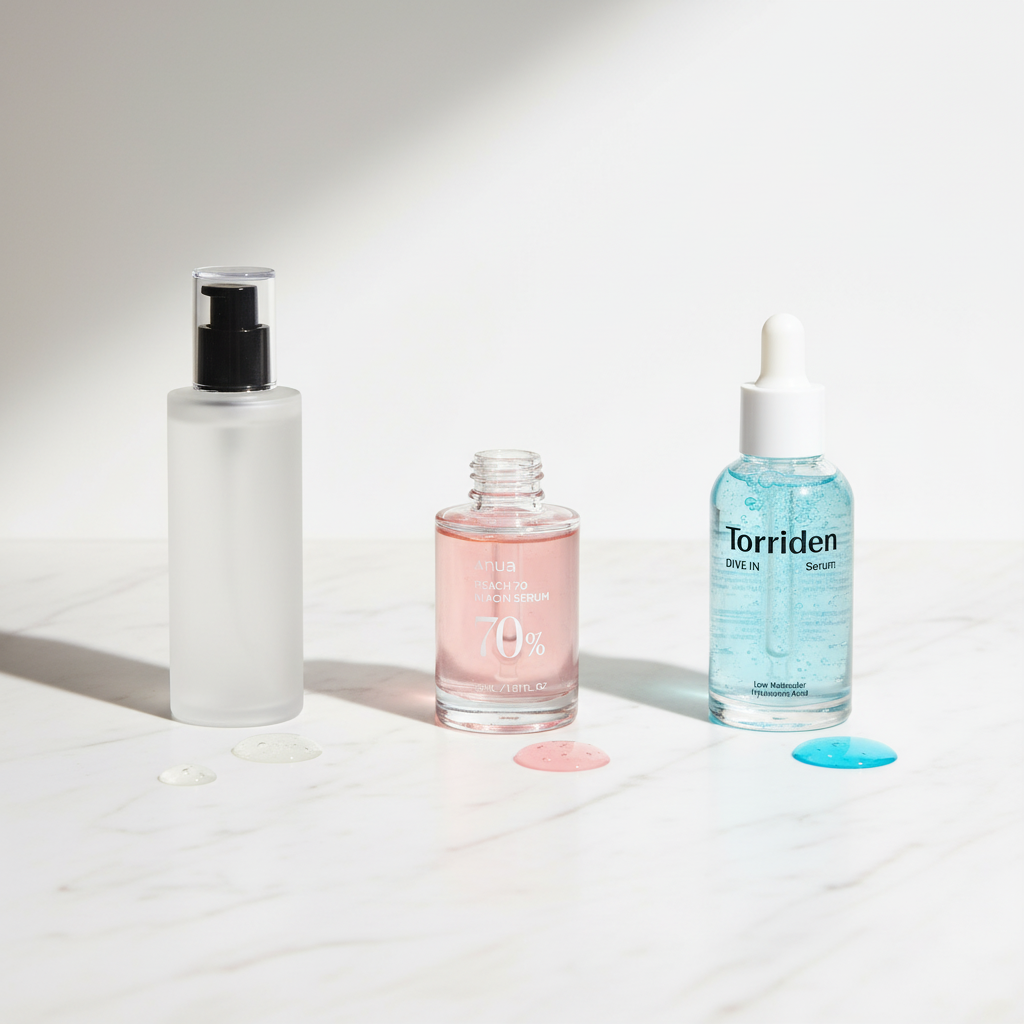
How to Layer Serums the Right Way
Applying multiple serums? The order matters more than you think. Learn the rules for layering serums without pilling, irritation, or wasted product.
Get the Glow
Weekly skincare breakdowns, ingredient deep-dives, and honest reviews. straight to your inbox.