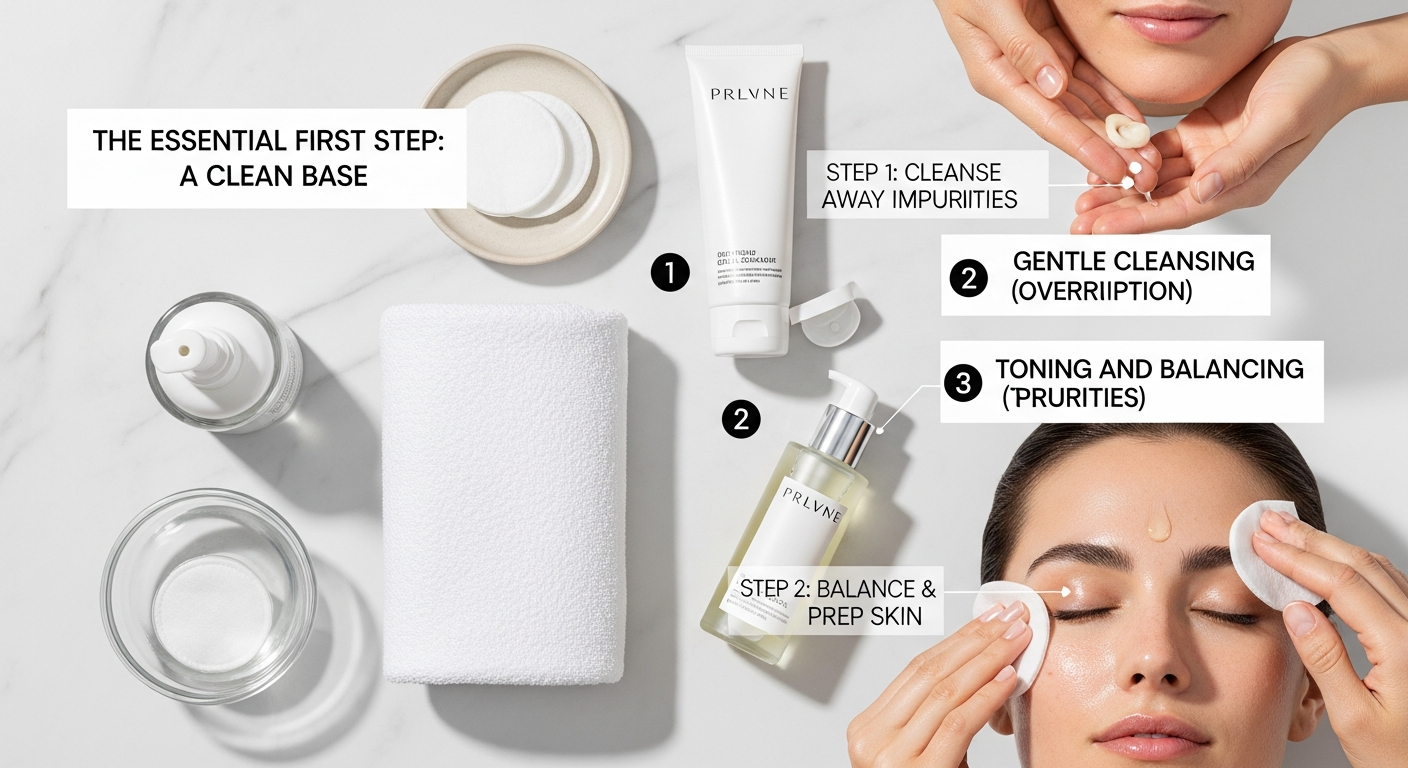
How to Build a Skincare Routine From Scratch
No idea where to start with skincare? This step-by-step guide walks you through building a routine that works, without overwhelming your shelf.
 Glow Coded Editorial
 Starting a skincare routine from zero is oddly intimidating. You walk into a store (or worse, open a browser) and suddenly there are 47 products claiming to change your life. Serums, essences, toners, ampoules. The vocabulary alone is enough to send you back to washing your face with bar soap.
Here’s the good news: a great skincare routine can start with just three products. Everything else is optional. The goal isn’t to buy more products. It’s to understand what your skin needs and build from there, one product at a time.
We’ve helped friends, family members, and colleagues build their first routines. This is the process that works every time.
Before You Buy Anything: Know Your Skin Type
Your skin type determines everything. Using the wrong products for your skin type is the main reason people say “skincare doesn’t work for me.” It does work. They just had the wrong products.
How to Determine Your Skin Type
Wash your face with a gentle cleanser. Pat dry. Wait one hour without applying anything. Then check:
- Oily. Your entire face looks shiny, especially the T-zone (forehead, nose, chin). Pores are visibly larger. Blotting paper picks up oil from most areas.
- Dry. Your skin feels tight and possibly rough or flaky. No visible oil. May look dull.
- Combination. Oily T-zone, but cheeks feel normal or dry. This is the most common skin type.
- Normal. Balanced. Not oily, not dry, not particularly sensitive. Congratulations, you won the genetic lottery.
- Sensitive. Reacts easily to new products. May appear red, feel itchy, or sting with many products. Sensitivity can accompany any of the above types.
Write it down. You’ll reference this for every product purchase.
The Foundation: Three Products
Every skincare routine on the planet shares these three steps. Start here and add nothing else for at least two weeks.
1. Cleanser
Your cleanser removes dirt, oil, and whatever else accumulated on your face during the day. The most important thing: it should clean your skin without making it feel stripped or tight.
For oily skin. A gel or foaming cleanser with a low pH (around 5.5). It should remove oil effectively without over-drying.
For dry skin. A cream or milk cleanser that leaves a slight softness. Avoid anything that foams aggressively.
For combination skin. A gentle gel cleanser is your safest bet. Something that handles oil without punishing the dry areas.
For sensitive skin. Fragrance-free, minimal ingredients, low pH. Look for words like “gentle,” “soothing,” and “barrier-friendly” on the label.
2. Moisturizer
Even oily skin needs moisturizer. This is the hill we will die on. Skipping moisturizer when your skin is oily actually makes your skin produce more oil to compensate for the dehydration. It’s counterproductive.
For oily skin. Lightweight gel-cream or gel moisturizer. Should absorb quickly and leave a matte or semi-matte finish.
For dry skin. A richer cream with ingredients like ceramides, shea butter, or squalane. Should feel nourishing without being greasy.
For combination skin. A medium-weight lotion or lightweight cream. You may want two moisturizers eventually. a lighter one for your T-zone and a richer one for your cheeks. But start with one.
For sensitive skin. Fragrance-free and simple. Ceramide-based moisturizers are excellent because they mimic your skin’s natural barrier.
3. Sunscreen (Morning Only)
SPF 50 broad-spectrum sunscreen, every single morning. Even in winter. Even if you work from home (UV penetrates windows). This is the single most impactful skincare product you’ll ever use.
UV exposure is responsible for up to 80% of visible skin aging, according to research published in the journal Clinical, Cosmetic and Investigational Dermatology. Wrinkles, dark spots, sagging, uneven texture. UV causes all of it. Every other product in your routine is partially undone if you skip sunscreen.
For oily skin. Look for lightweight, matte-finish formulas. Many Korean sunscreens excel here. The Anua Airy Sun Cream is one we recommend to beginners because it feels like nothing on the skin and never leaves a white cast.
For dry skin. Moisturizing sunscreens with hyaluronic acid or niacinamide pull double duty.
For sensitive skin. Mineral (zinc oxide/titanium dioxide) sunscreens tend to be less irritating than chemical ones.
Weeks 1-2: Just These Three
Use your three products consistently for two weeks. Morning routine: cleanser, moisturizer, sunscreen. Evening routine: cleanser, moisturizer. That’s it.
Pay attention to how your skin responds. Does your cleanser leave your skin feeling tight? Swap it. Does your moisturizer cause breakouts? Try a lighter formula. Is your sunscreen pilling under makeup? Different sunscreen.
This two-week period isn’t wasted time. You’re establishing a baseline and making sure your foundational products work before building on them.
Adding the Next Layer: Month 2
Once your foundation is solid, add one product at a time. One. Not three. Give each new addition two weeks before introducing the next one.
Step 4: Add a Toner
Not the astringent, alcohol-heavy toners of the past. Modern toners (especially Korean ones) are hydrating, watery liquids that prep your skin to absorb everything that follows.
Apply after cleansing, before moisturizer. Pat it in with your hands. No cotton pads necessary; they waste product. The Abib Heartleaf Calming Toner is a great first toner. It hydrates, calms, and preps the skin without any complicated active ingredients.
Step 5: Add One Serum
This is where you target a specific concern. Pick your number one skin issue and choose accordingly:
- Dullness and uneven tone. Vitamin C serum (use in the morning for antioxidant protection)
- Large pores and oil. Niacinamide serum (great all-rounder, very hard to mess up)
- Dehydration. Hyaluronic acid serum (apply to damp skin for best results)
- Fine lines and texture. Retinol (start very slowly; see our retinol beginner’s guide)
- Acne. Salicylic acid (BHA) or benzoyl peroxide, depending on severity
One serum. Not a serum cocktail. Resist the urge to address every concern at once.
Building Out: Month 3 and Beyond
Now that you have the basics down and one targeted active working for you, you can explore:
Double Cleansing (Evening)
Add an oil cleanser as your first step in the evening, before your regular cleanser. Oil dissolves oil-based products (sunscreen, makeup) that water-based cleansers can’t fully remove. This one addition often makes the biggest difference in skin clarity.
Exfoliant (2-3x per Week)
Chemical exfoliants (AHAs or BHAs) remove dead skin cells and improve texture. Don’t use physical scrubs with harsh particles; chemical exfoliation is more effective and less damaging.
- AHA (glycolic acid, lactic acid). For surface-level texture, dullness, and dry skin
- BHA (salicylic acid). For blackheads, oily skin, and congested pores
Start with once a week and build up. Never exfoliate on the same night you use retinol.
Eye Cream
The skin around your eyes is the thinnest on your face. It shows signs of aging first. If you’re noticing dark circles, puffiness, or fine lines, a dedicated eye cream can help. Apply with your ring finger (lightest touch) before moisturizer.
Sheet Masks (Weekly Treat)
Not a daily necessity, but a wonderful weekly ritual. Sheet masks deliver a concentrated dose of hydration and make you feel like you’re in a spa. Use them after toner, before serum.
The Complete Routine (Once You’re There)
Morning
- Gentle cleanser (or just a water rinse)
- Toner
- Serum (vitamin C or niacinamide)
- Eye cream
- Moisturizer
- Sunscreen
Evening
- Oil cleanser
- Water-based cleanser
- Toner
- Exfoliant (2-3 nights per week) OR retinol (alternate nights)
- Serum
- Eye cream
- Moisturizer
This looks like a lot, but once you’re in the rhythm, the whole routine takes about 5 minutes morning and 7 minutes evening. Most of the time you’re just patting things into your skin and waiting a few seconds between steps.
Common Beginner Mistakes
Buying everything at once. We get it. The excitement is real. But introducing multiple new products simultaneously means you can’t identify what’s helping and what’s hurting.
Expecting overnight results. Skin cell turnover takes about 28 days. Give any new product at least 4-6 weeks before judging its effectiveness. The only exception is products that cause immediate irritation or breakouts. those should go.
Following someone else’s exact routine. What works for a beauty influencer with dry skin in Norway won’t necessarily work for you in a humid climate with oily skin. Use routines as inspiration, not blueprints.
Ignoring your skin’s signals. If a product stings, burns, or causes persistent redness, stop using it. “Working through it” is bad advice. Your skin is telling you something.
Skipping sunscreen because it’s cloudy. UV rays penetrate clouds. This isn’t up for debate. Wear your sunscreen.
The Rule of One
If nothing else from this guide sticks, remember this: introduce one new product at a time and give it two weeks. This rule will save you money, frustration, and a bathroom cabinet full of half-used products.
Your skin already has everything it needs to be healthy. You’re just giving it the right support. Start simple, build slowly, and pay attention to what your skin is telling you.
Keep Reading
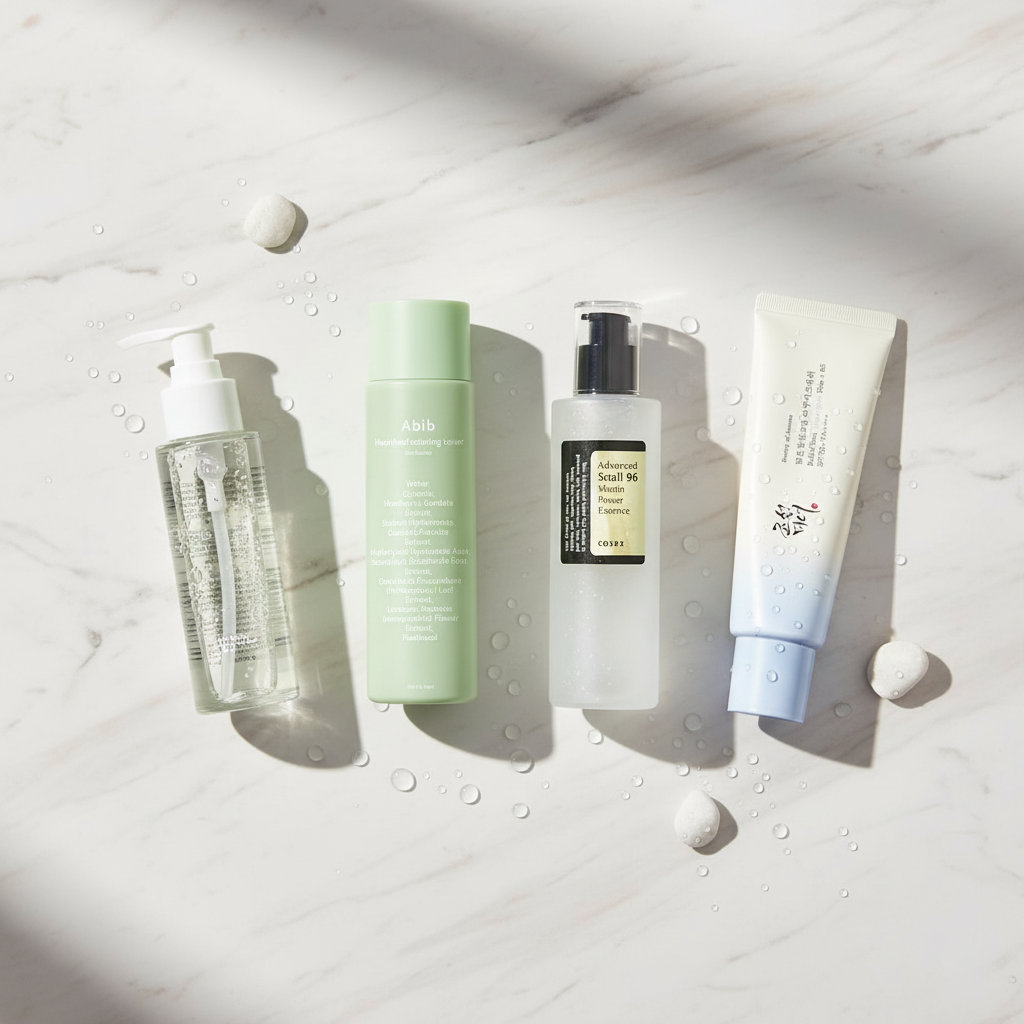
Korean Skincare Routine: The Complete Guide
Everything you need to know about the Korean skincare routine. from the famous 10-step method to a realistic, everyday approach that actually works.
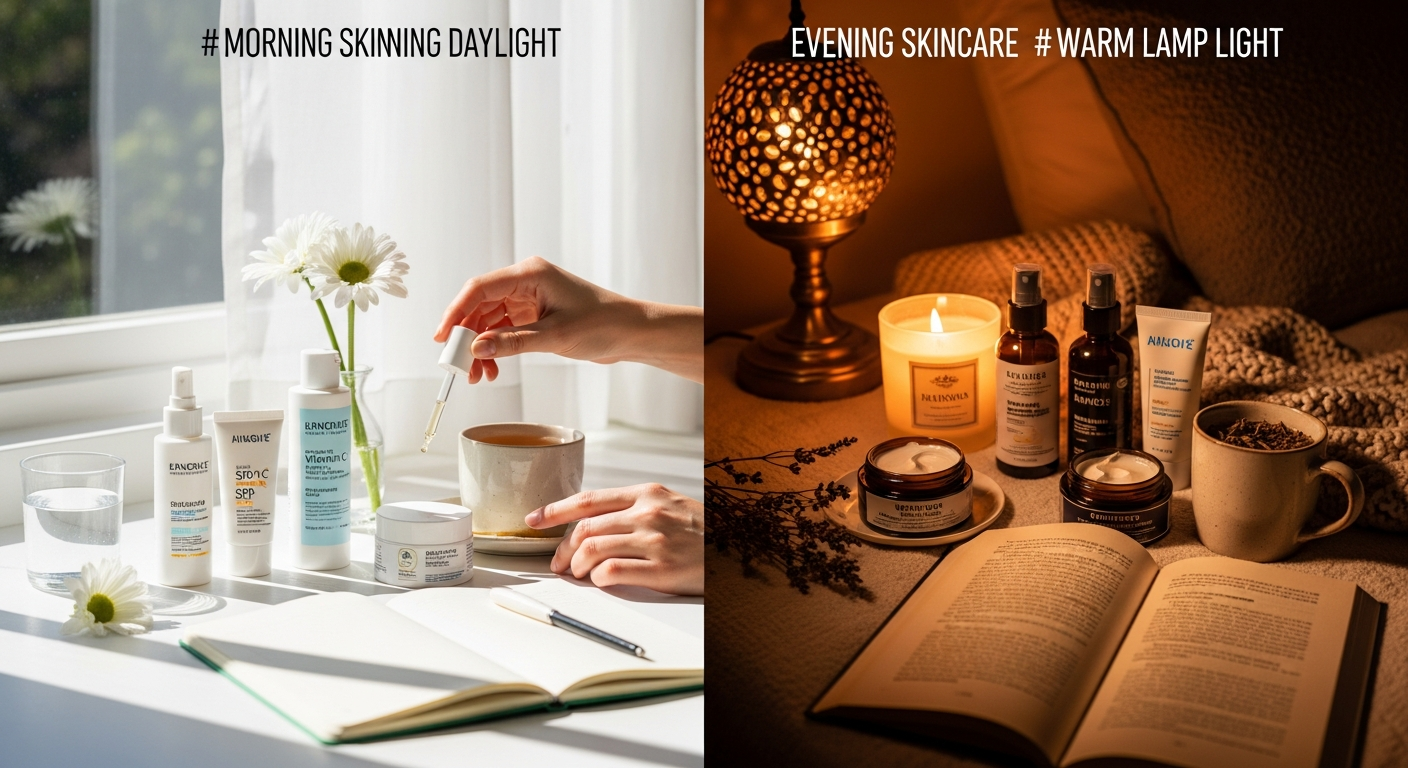
AM vs PM Routine: What Changes at Night
Your morning and evening skincare routines shouldn't be identical. Here's exactly what to change, why, and how to optimize both for better results.
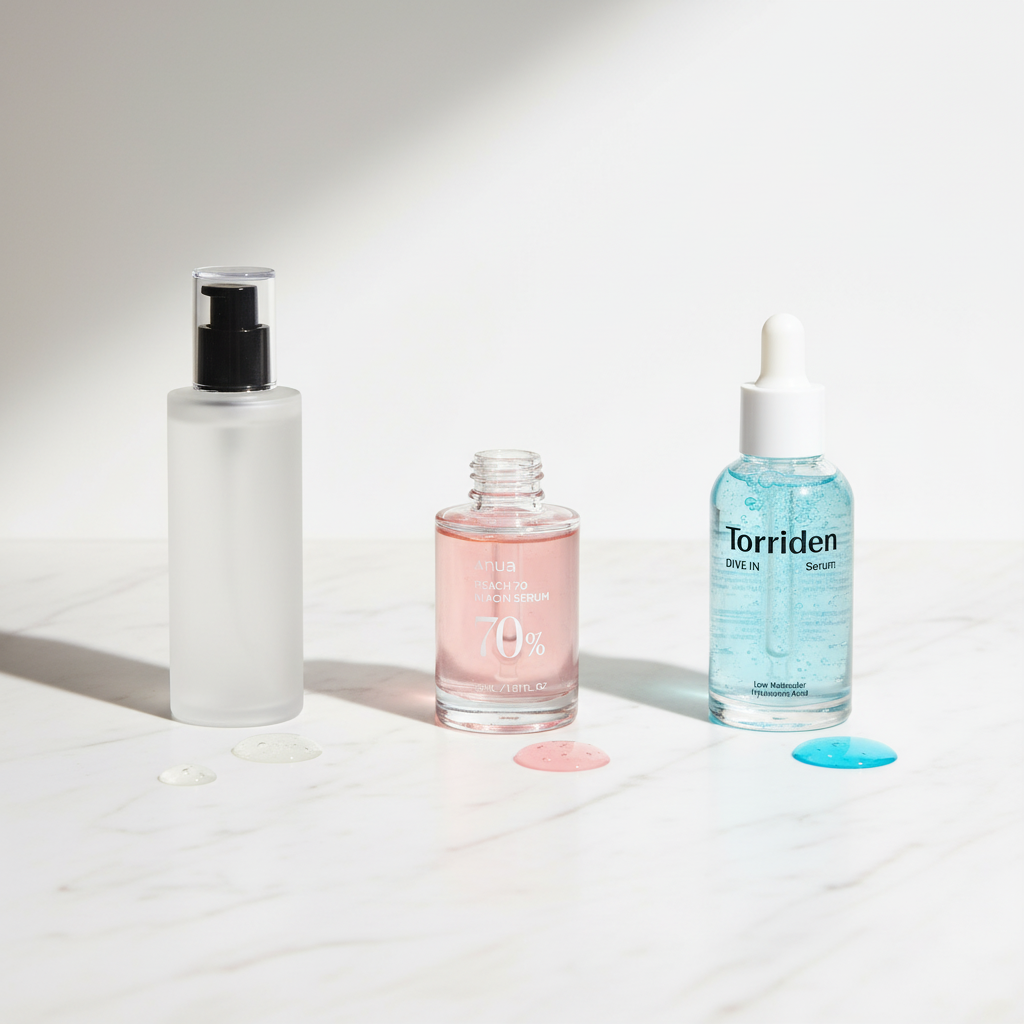
How to Layer Serums the Right Way
Applying multiple serums? The order matters more than you think. Learn the rules for layering serums without pilling, irritation, or wasted product.
Get the Glow
Weekly skincare breakdowns, ingredient deep-dives, and honest reviews. straight to your inbox.